The 4,300 km Extension Cord
Singapore froze all new data center construction for three years. To restart, it is building a 7.35 GW web of undersea cables to import renewable energy from four countries across Southeast Asia and Australia.
Singapore is a city-state of 6.1 million people on 733 square kilometres — slightly smaller than New York City — with . It imports virtually everything, including the natural gas that generates 94% of its electricity.
Current electricity supply
Source: EMA Singapore Energy Statistics 2024
Singapore is also Southeast Asia's most important data center market. Cushman & Wakefield ranks it among the top ten globally, ahead of Hong Kong, Sydney, and Seoul. The country hosts the region's densest cluster of subsea cable landings, the lowest-latency connections to the rest of Asia, and a regulatory framework that international operators trust. AWS has pledged SGD 12 billion in Singapore cloud infrastructure through 2028, Google roughly USD 5 billion, and both Chinese and Western operators compete for limited slots.
The constraint is power — severe enough that in 2019 the government froze all new data center construction for three years.
Singapore's answer to the resulting supply question is infrastructure that does not yet exist: a web of undersea cables stretching thousands of kilometres to solar farms in Australian deserts, hydropower dams in Laos, and offshore wind turbines in Vietnamese waters. The country has issued conditional import approvals for 7.35 GW across ten projects from four countries. The largest single project, the AAPowerLink, would run a 4,300 km HVDC cable from the Northern Territory to Singapore, longer than the distance from London to Cairo.
TL;DR
- Singapore froze all new data center construction in 2019. Since reopening 3 years later, new capacity has required actual green energy supply
- The country has conditionally approved electricity imports from four countries via subsea cables and grid interconnections.
- The centerpiece is the AAPowerLink: a 4,300 km HVDC cable from Australian desert solar, estimated at A$30-40 billion.
- The regulatory framework is in place but most import capacity will only arrive in the early 2030s.
Astronaut photograph ISS070-E-80842, NASA Earth Observatory. Public domain.
The Moratorium
Looking back at 2019, data centers already consumed about 7% of national electricity, and their demand was growing a rate faster than any other sector. In response the government halted new data center approvals until there was a plan for sustainable growth. It's worth considering here that Singapore has focused for decades to attract tech investments.
The moratorium held for three years and reopened in 2022 through a new mechanism: Data Centre Call for Application (DC-CFA). DC-CFA is a competitive tender in which operators bid for limited capacity slots under the conditions for actual renewable energy sourcing rather than certificates.The first round allocated just 80 MW across four operators: Microsoft, Equinix, GDS, and an AirTrunk-ByteDance consortium.
A second round in December 2025 opened over 200 MW for application with tighter conditions still: at least 50% of each facility's electricity from verified green supply, PUE targets lowered slightly from 1.3 to 1.25. Data center expansion in Singapore is since then effectively gated by the pace of renewable energy infrastructure buildout.
This week you could headlines about US President Trump's demand on US data center developers to ‘build your own power plant’ but in Singapore this is already normal.
The Tropical Penalty
At 1.35°N, with 31-33°C and ~82% humidity year-round, free cooling is impossible. Cooling accounts for up to 40% of a Singapore data center's energy consumption, versus ~9% in Nordic facilities.
DC-CFA2's PUE requirement of 1.25 is equivalent to achieving ~1.07 in Iceland — both state of the art, but Singapore's demands liquid cooling and purpose-built infrastructure just to meet the floor. NUS and NTU's Tropical Data Centre Testbed hit a PUE of 1.08 with full liquid cooling, also cutting IT power by 30%.
Sources: IEEE Spectrum, NUS, Uptime Institute, IMDA
Data Centers' Growing Slice
Singapore electricity consumption by sector. Data centers are projected to grow from 7% in 2020 to an estimated 24% by 2030.
2020
~51 TWh
2025
~56 TWh
2030
~68 TWh
Sources: EMA Singapore Energy Statistics, IMDA Green Data Centre Roadmap (2024). 2030 values are estimates based on DC-CFA allocations and import timelines.
Singapore Data Center Power Capacity (MW)
The moratorium (2019-2022) froze capacity growth. The projected ramp from 2026 depends on cross-border imports materializing.
Sources: IMDA, EMA, Cushman & Wakefield Asia Pacific Data Centre Report. Post-2025 values are projections gated by import infrastructure timelines.
Solar panel buildout
Singapore's data center power crunch looks pretty different to the global supply gap facing the US, Europe, or China — but also its response.
If you regularly walk through any HDB estate and you have likely notice some changes over the past years. More and more blocks are being fitted with solar panels. Rows of photovoltaic modules line the rooftops of residential towers that house close to 80% of the population.
The programme behind this is called SolarNova, one of the world's largest public housing solar deployments. Over 8,400 HDB blocks have been committed for rooftop solar. At around 2,700 installed panels the programme has committed 455 MWp of capacity so far, with a target of 540 MWp by 2030. Nationally, Singapore hit its 2025 target of 1.5 GWp of installed solar and is on track for 2 GWp by 2030.
The Rooftop Gap
Domestic solar output as a share of national electricity demand, compared to data center consumption alone. Even covering every viable rooftop cannot close the gap.
~540 MWp on HDB rooftops
triggered the freeze
and growing
Sources: EMA Singapore Energy Statistics, HDB SolarNova programme. Solar percentage based on 2 GWp target relative to ~52 TWh national demand. DC share from EMA, IMDA. Scale: 0-30% of national electricity demand.
But given Singapore's size there is only so much rooftop to work with. That gap between domestic generation and growing demand sets the relevant context.
Building a Regional Energy Web
Rather than building domestic power plants or tapping into a large existing grid, Singapore is constructing an entirely new import infrastructure: undersea cables and multilateral grid interconnections designed to bring renewable electricity from neighbouring countries.
The Energy Market Authority (EMA), Singapore's electricity regulator, has granted conditional approvals to ten import projects totalling 7.35 GW. In April 2025, the government established Singapore Energy Interconnections (SGEI), a government-linked entity to invest in, develop, and operate the interconnector infrastructure.
Singapore's Cross-Border Energy Web
Planned and operational electricity import routes. Line thickness is proportional to capacity. Dashed lines indicate grid-wheeled routes through transit countries.
Singapore
7.35 GW
total conditional import capacity from 4 countries
See import partner profiles below
Sources: EMA conditional import approvals, Sun Cable, SGEI. Capacities reflect conditional approval volumes, not operational capacity. Country outlines from Natural Earth.
The first cross-border power already flows. The Lao PDR-Thailand-Malaysia-Singapore Power Integration Project (LTMS-PIP), operational since June 2022, delivers Laotian hydropower to Singapore by "wheeling" it through the Thai and Malaysian grids. The mechanics are worth understanding, because they are the template for everything larger that follows.
Electricity from Laos's Nam Ngum hydropower is wheeled south through Thai and Malaysian transmission networks to Singapore — roughly 1,600–1,900 km through four countries. The electrons do not literally travel end-to-end; grid wheeling is an accounting mechanism where each transit country injects equivalent power at its border.
How Grid Wheeling Works
The LTMS-PIP route: Laotian hydropower is "wheeled" through two transit grids. Each country injects equivalent power at its border.
Laos
Nam Ngum hydropower
~1,000 km
230 kV AC
Thailand
EGAT 230 kV AC network
110 km
HVDC
Malaysia
TNB grid
~500 km
AC
Singapore
National grid
Laos
Nam Ngum hydropower
230 kV AC · ~1,000 km
Thailand
EGAT 230 kV AC network
HVDC · 110 km
Malaysia
TNB grid
AC · ~500 km
Singapore
National grid
Khlong Ngae-Gurun HVDC link: 200 MW used of 300 MW rated capacity. Scaling beyond this requires new transmission infrastructure.
Sources: ASEAN Centre for Energy, EMA, EGAT, TNB. Distances are approximate transmission path lengths.
This legal arrangement was the first of its kind in the ASEAN region: third-party grid access — allowing a Laotian state enterprise to commercially use Thai and Malaysian transmission lines. ASEAN had never done this. In October 2025, the arrangement was doubled to 200 MW and upgraded to multidirectional trading. It is still small, but it established the multilateral precedent on which larger imports will build.
The Import Partners
Each of Singapore's four import corridors carries different risks, timelines, and dependencies. Indonesia offers proximity and scale. Australia offers transformative capacity at extreme engineering cost. Cambodia and Vietnam offer diversification but depend on transit agreements and immature regulatory frameworks.
🇮🇩Indonesia
Short strait crossings, Riau Islands
3.4 GW
2027-2030
Nearest and largest source. Solar + battery projects across Batam, Bintan, and Bulan. Shortest crossings, lowest risk.
Source: EMA / Rystad Energy
🇦🇺Australia
4,300 km subsea HVDC cable
1.75 GW
Early 2030s
Sun Cable's AAPowerLink: 17-20 GW solar, 36-42 GWh battery in the Northern Territory. 4,300 km HVDC subsea cable — the longest ever proposed. Centrepiece of the import strategy.
Source: EMA / Sun Cable
🇻🇳Vietnam
~1,000 km subsea, South China Sea
1.2 GW
~2033
Sembcorp-led offshore wind via subsea cable across the South China Sea. Risks comprise maritime boundary disputes and Vietnam's immature offshore wind framework.
Source: EMA / Sembcorp
🇰🇭Cambodia
1,000+ km, wheeled via Thailand/Malaysia
1.0 GW
~2035
Keppel-led floating solar + hydro, wheeled through Thai and Malaysian grids. Three transit countries, multilateral agreements required.
Source: EMA / Keppel
Import projects as of February 2026. All capacities reflect EMA conditional approvals, not operational capacity.
The AAPowerLink
The centrepiece of Singapore's import strategy nearly dissolved in a shareholder dispute before a single panel was installed. The Australia-Asia PowerLink (AAPowerLink), developed by Sun Cable, would be among the largest energy infrastructure projects ever undertaken — and it came within months of not existing at all.
Image: Sun Cable.

Mike Cannon-Brookes
Atlassian co-founder
Grok Ventures (~25%)
Atlassian (CC0)
Andrew Forrest
Fortescue founder
Squadron Energy (~25%)
Xuthoria/Wikimedia (CC BY-SA 4.0)
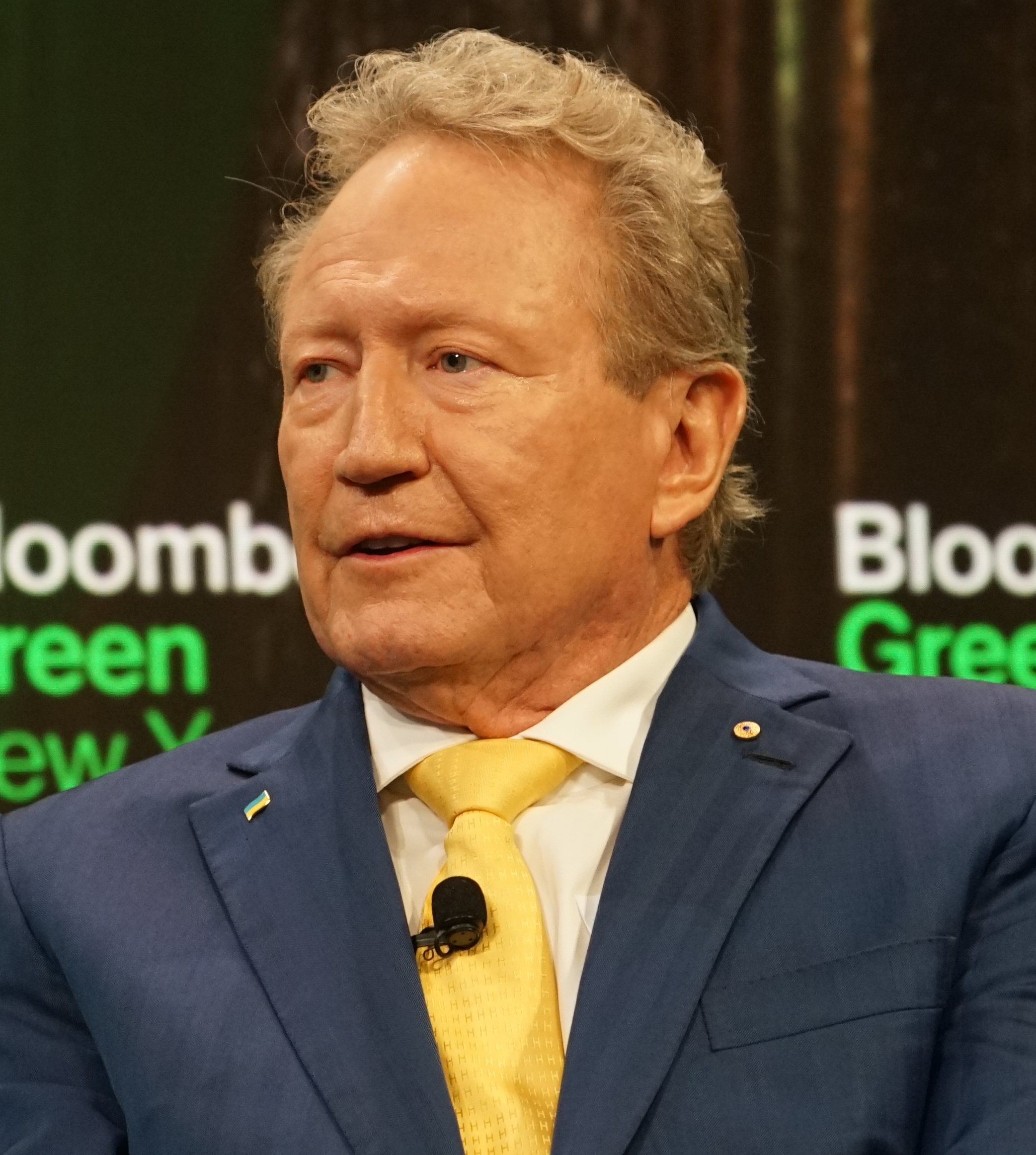
In January 2023, Sun Cable entered voluntary administration after a breakdown between its two major shareholders. The two disagreed on the terms of a new funding round. Cannon-Brookes lent A$65 million during the administration to keep the company operational, then led a consortium with Quinbrook Infrastructure Partners that acquired Sun Cable in September 2023. Forrest did not submit a binding offer. Without Cannon-Brookes's intervention, the largest project in Singapore's import pipeline would have dissolved in a shareholder dispute.
Since the restructuring, the projects has progressed but with delays. The Australian government cleared the 12,000-hectare Powell Creek site for up to 10 GW of solar and up to 42 GWh of storage in August 2024. More symbolically, Sun Cable signed a 70-year agreement with the Traditional Owners of the land in November 2025 – speaking of long-term planning. Singapore's EMA granted conditional approval for 1.75 GW of import capacity in October 2024. The next gate is a final investment decision, targeted for 2027. First power to Singapore: early 2030s.
The Powell Creek Solar Site
Located roughly 700 km south of Darwin in Australia's Northern Territory. The site receives some of the highest solar irradiation on Earth — an average of 6.1 kWh/m²/day, roughly 40% more than Singapore's rooftops receive.
12,000
hectares
10 GW
solar approved
42 GWh
battery storage
Sources: Sun Cable, Australian Government EPBC approval (Aug 2024). Solar and storage figures reflect approved capacity; Sun Cable's full project vision targets 17-20 GW solar and up to 42 GWh storage.
The AAPowerLink in Numbers
A single project that would reshape Singapore's energy landscape.
~9%
of Singapore's total electricity needs
~17
hyperscale campuses it could power
6x
longer than any existing subsea power cable
A$30B+
estimated project cost
Cable length in context
Sources: Sun Cable, EMA, National Grid (North Sea Link). North Sea Link (Norway-UK, 720 km, operational 2021) is the longest existing HVDC subsea power cable.
The South China Sea Question
The Vietnam import route would cross roughly 1,000 km of the South China Sea, much of which falls within overlapping sovereignty claims. These sit at the root for the 'maritime boundary disputes' mentioned earlier. A Carnegie Endowment analysis identifies three distinct layers of vulnerability:
Overlapping claims
Multiple states assert jurisdiction over portions of the route. China requires permits for cable work within its claimed waters, while other claimants maintain their own competing positions.
National regulations
Indonesia's cabotage policy delayed SEA-ME-WE 5 repairs by weeks in 2024. Malaysia had inconsistent federal and state rules until a mid-2024 exemption. Regulatory friction is not limited to any one country.
Repair capacity
RSIS notes that no ASEAN state has sovereign cable repair capability. The entire Indo-Pacific relies on ~16 specialist ships operated by foreign companies.
Sources: Carnegie Endowment (Elina Noor), RSIS Singapore, ISEAS-Yusof Ishak Institute
These are not hypothetical risks. In April 2024, the SEA-ME-WE 5 telecom cable developed a fault in the Strait of Malacca, roughly 440 km from Singapore. Water penetrated the cable's insulation, and the connection to Singapore's Tuas landing station went down. A repair ship could have fixed it in two to three days. Instead, the repair took nearly ten weeks.
The delay was regulatory, not technical. Indonesia's cabotage policy requires all cable work in Indonesian waters to be performed by Indonesian-flagged vessels with Indonesian crews — a sovereign prerogative, but one that creates practical bottlenecks. As of 2024, only three Indonesian-registered ships have repair capability. The process of securing permits and arranging compliant vessels extended what would otherwise have been a short repair into a two-month timeline. Bangladesh lost roughly a third of its international internet capacity for the duration.
Separately, also in April 2024, a Vietnamese cable repair crew escorted by a naval vessel encountered a Chinese Coast Guard vessel while repairing a damaged cable in waters where Vietnam and China hold overlapping claims. The Coast Guard vessel closed to within roughly two kilometers, requested information about the ship's activities over radio, and remained in the area for a full day before departing. The repair was completed without incident, but cable industry executives described it as the first encounter of its kind involving subsea cable work in the South China Sea.
There is also extensive cooperation. China is a consortium member of the Asia Direct Cable connecting Singapore, Vietnam, the Philippines, Thailand, and Japan. ASEAN countries are diversifying across suppliers — Japan (41%), the US (20%), China (19%), France (18%) — rather than aligning with any single bloc. But for an HVDC power cable, the stakes are higher than telecom: a typical repair takes 30-100 days in uncontested waters, and no HVDC cable has been commissioned through waters with comparable overlapping claims.
The South China Sea Cable Route
The proposed Vietnam-Singapore cable would cross ~1,000 km of waters subject to overlapping sovereignty claims by multiple states (red segments).
~1,000 km subsea cable across South China Sea
Nine-dash line: overlapping sovereignty claims across most waters this cable would cross
30–100 days
Typical HVDC repair
in uncontested waters
6+ months
Estimated in waters with
overlapping permit regimes
Sources: Carnegie Endowment, RSIS Singapore, ISEAS-Yusof Ishak Institute. Nine-dash line position is approximate.
Recent Subsea Cable & Pipeline Incidents
27 cable breaks in 5 years
Fishing vessel anchors
Balticconnector gas pipeline severed
Anchor drag — 6-month repair
Chunghwa Telecom cable cut near Keelung
Cameroon-flagged bulk carrier; under investigation
AAE-1, Seacom, EIG, TGN cables severed
Houthi-sunk vessel anchor dragged across four cables simultaneously
Two telecom cables cut
Suspected anchor drag
Sources: CNN (Matsu/Taiwan), Offshore Energy (Balticconnector), CBS News (Red Sea), Wikipedia (Baltic 2024), The Diplomat (Taiwan 2025)
Every route depends on continued bilateral cooperation — in the mid-term there is no purely domestic fallback. Singapore's energy strategy depends on ASEAN stability.
There is precedent though. Lee Kuan Yew treated water as an existential dependency and in 1961 secured long-term water agreements with Malaysia, and later invested in technology like NEWater to reduce that dependence.
Harmonized Landsat Sentinel-2 (HLS), May 10, 2021. NASA Earthdata. Public domain.
The Johor Spillover
So far we only looked at Singapore but the moratorium mentioned earlier had other significant side-effects. While Singapore planned cables and negotiated permits, the demand didn't wait. Within the broader fast growing Southeast Asian data center market Malaysia and Indonesia have been beneficiaries of Singapore's power constraints. In particular Johor Bahru, 30 km across the causeway in Malaysia, absorbed major parts of the demand, attracting operators who wanted Southeast Asian connectivity.
Causeway photo: Terence Mack, Wikimedia Commons (CC BY-SA 4.0). AirTrunk JHB1: AirTrunk.
The scale here striking: In 2021, Johor had roughly 10 MW of live data center capacity. By late 2024, total capacity including projects under construction exceeded 1,300 MW. DC Byte named it the fastest-growing data center market in Southeast Asia. As of mid-2025, the total pipeline exceeds 5 GW across 42 approved projects, representing RM 164 billion (~USD 37 billion) in approved investment. AirTrunk, Microsoft, YTL Power (in partnership with Nvidia for a 600 MW AI campus), Bridge Data Centres, and NTT DATA are among the operators building there.
130×
Capacity growth in 3 years
10 MW → 1,300 MW live + pipeline (2021–2024)
5 GW
Total pipeline
42 approved projects
11 GW
Power applications to TNB
~42% of Malaysia’s generation capacity
Sources: DC Byte, Data Center Dynamics, TNB, MIDA
Johor is now encountering its own version of the same constraints. TNB, Malaysia's national utility, has received power applications exceeding 11 GW, over 40% of the country's total generation capacity. New data center projects have been told to wait for water until mid-2027 while treatment plants are built. Electricity tariffs for data center customers have risen 10-15% under the new tariff structure.
APAC Data Center Hubs
Singapore ranks second in APAC but is the only major hub where growth is gated by energy policy rather than demand.
| Hub | Country | Capacity (MW) | Primary Constraint |
|---|---|---|---|
| Tokyo | Japan | 1,800+ | Land scarcity |
| Singapore | Singapore | 1,400+ | Power-gated |
| Sydney | Australia | 800+ | Grid capacity |
| Mumbai | India | 600+ | Grid reliability |
| Hong Kong | China (SAR) | 500+ | Land cost |
| Seoul | South Korea | 450+ | Energy cost |
| Johor Bahru | Malaysia | 300+ | SG spillover |
| Jakarta | Indonesia | 200+ | Emerging |
Sources: Cushman & Wakefield Asia Pacific Data Centre Report (2025), McKinsey. Capacity figures are approximate operational IT load.
But proximity is not equivalence. Singapore retains advantages in subsea cable connectivity, regulatory stability, and financial infrastructure that neighbours cannot easily replicate. The two markets are more likely to grow in tandem than in competition.
Rystad Energy estimates that ASEAN could unlock 25 GW of renewable energy capacity and over $40 billion in investment through Singapore-anchored interconnections. If that materialises, Singapore's import strategy would do more than power its own data centers; it could catalyse a regional renewable energy market that currently does not exist.
The Critical Path
The gap between the regulatory framework and the physical infrastructure is measured in years. Conditional approvals are in place but the actual electricity won't flow at scale until the late 2020s at earliest, with the largest capacity arriving in the early 2030s. The question is whether the physical infrastructure follows the policy.
Singapore Energy Import Timeline
Policy decisions (solid), operational milestones (half), and projected targets (outline). Most capacity arrives after 2030.
Sources: IMDA, EMA, Sun Cable, SGEI. Target dates are developer-stated and subject to regulatory and construction timelines.
What This Means
Singapore has been the first major data center market to explicitly tie compute expansion to renewable energy infrastructure buildout. Hong Kong, Taiwan, and other land-constrained hubs face similar constraints but have not yet adopted comparable frameworks — and now even US President Trump is demanding such agreements.
Cable Vulnerability
Singapore's energy supply would depend on cables crossing waters where telecom lines have already been severed, rerouted, or delayed by sovereignty disputes and a regional shortage of repair ships. A single HVDC failure could take six months to fix.
Diversification across routes reduces single-source risk but multiplies maritime and regulatory exposure.
The Johor Safety Valve
Every megawatt that doesn't arrive in Singapore on schedule has a ready alternative 30 km north. Johor's pipeline already exceeds 5 GW, and sub-5 ms latency makes it functionally equivalent for most workloads.
Johor's 130x capacity growth in three years is a direct consequence of Singapore's constraints.
ASEAN Integration Precedent
If the import web works, it creates ASEAN's first multilateral renewable energy market. Four-country grid wheeling is already operational. The Cambodia and Vietnam routes would extend it to six countries.
Infrastructure built for data centers could become the backbone of regional energy integration.
Tropical Engineering as Export
Singapore's PUE mandates, liquid cooling standards, and floating data centre work in equatorial conditions could become a template for other tropical markets facing the same thermodynamic constraints.
Directly applicable to Jakarta, Mumbai, Lagos, and other equatorial hubs as AI workloads grow.
The distinguishing feature of Singapore's framework — that every new megawatt of compute requires a matching commitment of clean energy — means that construction delays in Australia, Indonesia, or Vietnam directly constrain data center growth in Singapore. No other major market has coupled its compute expansion this tightly to infrastructure decisions made in other countries. That coupling is what drew operators to compete for limited DC-CFA slots despite the constraints. It is also what the Lowy Institute flags as a structural vulnerability: electricity cannot be rerouted if a cable is damaged, and any repair would require the host country's approval — a dynamic Singapore knows well from decades of water agreements with Malaysia.